







Abdul Naseer
The growing preference for decorative lights is putting an age-old craft and the livelihoods of local artisans under pressure. Choosing an earthen diya is not just a cultural gesture; it is also an act of economic support.
Diwali is the festival of lights, a celebration deeply rooted in India’s cultural traditions. Yet, amid the dazzling glow of modern decorative lighting, the humble earthen diya — one of the festival’s most enduring symbols — is gradually losing its place in many homes. For the potter community, this shift is more than a change in consumer preference; it is a matter of livelihood.
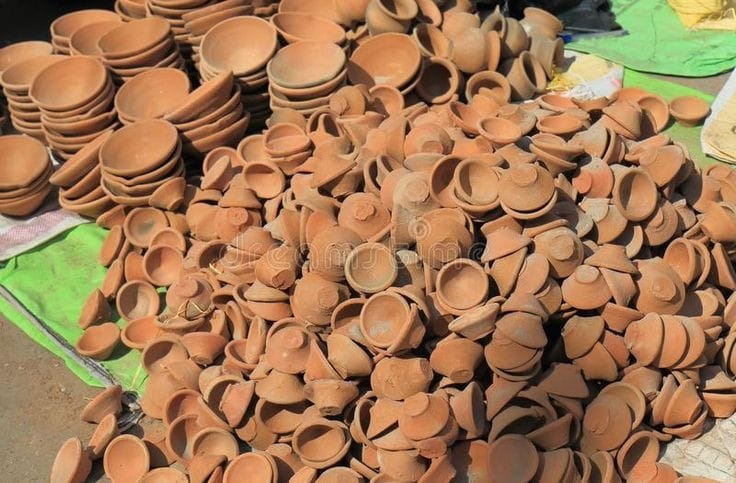
As the festival approaches, potter families are working day and night to prepare thousands of earthen diyas, hoping that the festive season will bring them better earnings. However, the growing popularity of Chinese lights and imported decorative products has intensified competition in the market, affecting the demand for traditionally made diyas. The artisans who keep this craft alive are increasingly worried about whether their hard work will translate into meaningful sales.
The irony is hard to ignore. A festival celebrated as a symbol of light and prosperity should also bring hope and prosperity to the people whose traditional skills are closely associated with it. Yet, while markets glitter with modern decorations, the families shaping thousands of earthen lamps often remain uncertain about their earnings.
An earthen diya is not merely a source of light or a decorative object. It represents India’s cultural heritage, faith and the continuity of generations-old craftsmanship. Its significance cannot be measured only by its price or brightness. Every diya purchased from a local potter helps sustain a traditional occupation and provides direct economic support to an artisan family.
The responsibility, therefore, rests partly with consumers. Choosing locally made earthen diya over imported decorative alternatives is a simple but meaningful way to support indigenous products. Social organisations and community groups can also play an important role by encouraging people to buy from local artisans and keeping traditional crafts relevant.
Modern lighting may add glamour to Diwali celebrations, but it should not come at the cost of traditional livelihoods. There is room for both innovation and heritage in our festivities. What matters is ensuring that the people who preserve our cultural traditions are not left behind.
This Diwali, let us go beyond decorating our homes. Let us bring light into the lives of the potter families who work tirelessly to make the festival brighter for everyone. Buy an earthen diya, support a local artisan and keep the flame of tradition alive.