





Jaipur, December 26
The historic India–New Zealand Free Trade Agreement (FTA) and the Comprehensive Economic Partnership Agreement (CEPA) between India and Oman are set to unlock new trade and investment opportunities for Rajasthan across key sectors such as textiles, gems and jewelry, and handicrafts. Forged under the visionary leadership of Prime Minister Narendra Modi, these landmark agreements mark a significant step in strengthening India’s global trade partnerships and are expected to generate vast opportunities for Rajasthan in exports, investment, services, and employment.
The Free Trade Agreement, signed under the leadership of India’s Prime Minister Narendra Modi and New Zealand’s Prime Minister Christopher Luxon, is expected to enhance trade opportunities for Rajasthan in several sectors, including textiles and apparel, leather and footwear, gems and jewelry, engineering goods, handicrafts, processed foods, pharmaceuticals, and plastic and rubber products. The elimination of tariffs of up to 10 percent on several product categories will enable Rajasthan’s exporters to access the New Zealand market more competitively. This agreement is expected to particularly benefit labor-intensive sectors, which form the backbone of Rajasthan’s industrial ecosystem, by boosting production, exports, and job creation. It also (Continued on page 4)
opens new avenues in services, education, and skilled workforce development, as New Zealand is creating dedicated visa pathways for Indian students and professionals. This will benefit the youth of Rajasthan and skilled professionals in IT, engineering, healthcare, education, construction, AYUSH, and tourism. In addition, the agreement includes a commitment of US$20 billion in investments over 15 years, providing Rajasthan with opportunities to attract long-term foreign investment in manufacturing, infrastructure, agricultural value chains, renewable energy, and other emerging sectors.
Similarly, the Comprehensive Economic Partnership Agreement (CEPA) signed between India and Oman under the leadership of Prime Minister Narendra Modi and His Majesty Sultan Haitham bin Tariq will provide new opportunities for economic growth in Rajasthan. Under CEPA, Oman has eliminated duties on 98.08 percent of its tariff lines, while India has offered concessions on 77.79 percent of its tariff lines. Several key sectors, including gems and jewelry, textiles, leather, footwear, sporting goods, plastics, furniture, agricultural products, engineering products, pharmaceuticals, medical devices, and automobiles, will benefit from the complete elimination of tariffs. Given Rajasthan’s significant export volume, CEPA is expected to bring substantial benefits to the state, offering zero-duty access that will provide exporters with a strong cost and competitive advantage.
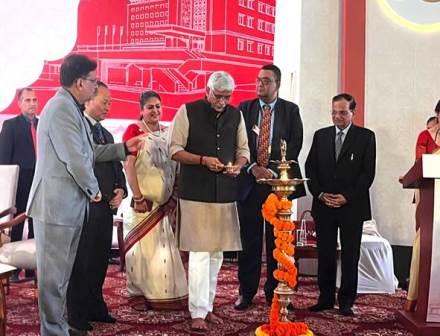
Speaking on the occasion, Suresh Kumar Ola, Commissioner Industries and Commerce, Government of Rajasthan, said: “These historic trade agreements will act as a catalyst for Rajasthan’s economic transformation. By opening new markets, reducing tariffs, and creating pathways for investment and services, they will empower our artisans, entrepreneurs, and youth to compete globally. Rajasthan is ready to seize this opportunity and position itself as a leading hub for exports, innovation, and inclusive growth.”
In the gems and jewelry sector, precious and semi-precious stones, handcrafted jewelry, and value-added gemstone products will receive duty-free entry, leading to improved margins and increased export volumes. Similarly, in the textiles and handicrafts sector, handloom products, home furnishings, carpets, and apparel will gain better access to Gulf countries and re-export markets. Exports of leather, footwear, and furniture will also increase as tariffs have been eliminated for these MSME clusters. In the agriculture and processed products sector, spices, pulses, oilseeds, and organic products will benefit from the acceptance of India’s NPOP certification, directly boosting exports, creating employment, and empowering artisans, women entrepreneurs, and MSMEs across Rajasthan. Oman’s strategic geographical location as a logistics and re-export hub for the Middle East and Africa will further allow exporters from Rajasthan, especially MSMEs, to expand into Gulf, African, and West Asian markets.
The CEPA also offers a comprehensive package in services, including computer-related services, business, professional, audio-visual, research and development, education, and health services, opening significant opportunities for service providers and professionals from Rajasthan. Skilled workers, consultants, architects, doctors, and engineers will benefit from these provisions. The agreement also promotes traditional medicine, which will support AYUSH institutions, wellness centers, yoga, naturopathy, and traditional treatment providers in Rajasthan, strengthening the state’s position as a wellness and medical tourism destination for Gulf countries. Fast-tracking of pharmaceutical marketing authorizations and acceptance of GMP inspection documents will significantly reduce time and costs for pharmaceutical companies and healthcare exporters associated with Rajasthan. With the allowance of 100 percent foreign direct investment for Indian companies in key service sectors, Rajasthan can attract Omani investment in industrial parks, logistics hubs, food processing, textiles, and gems and jewelry.
These agreements are poised to play a pivotal role in fulfilling Rajasthan’s goals of export-oriented growth and global integration. By leveraging tariff concessions, investment commitments, and expanded service opportunities, Rajasthan stands ready to strengthen its position as a leading hub for trade, industry, and innovation.